TLMI

Industry Leadership at a Crossroads: Reflections from the AWAVirtual™ Insights Forum 2026

By Dale Coates

TLMI CEO & President


At the 2026 AWAVirtual™ Insights Forum, I had the opportunity to join fellow industry leaders in a discussion about the future of labeling and packaging, an industry experiencing profound regulatory, technological, and cultural transformation. As CEO & President of TLMI, I was honored to share perspectives on where change is happening fastest and how associations like ours can help guide the industry toward a more sustainable, innovative, and resilient future. 


A Convergence of Forces Reshaping the Industry 

From my vantage point, the most consequential shift occurring in the labeling and packaging ecosystem today is the accelerating demand for design for recyclability, driven largely by tightening regulations and increasingly sustainability minded consumers. In the United States, the emergence of state level Extended Producer Responsibility (EPR) programs is ushering in new accountability across the value chain. These changes are reshaping how companies think about everything from material selection to long-term capital investment.  

Culturally, younger generations now expect sustainability to be embedded in every decision, from product development to packaging disposal. What once felt optional has become an operating requirement. 


Infrastructure: The Unmoved Bottleneck 

When asked what entrenched practice I would redesign to advance circularity, the answer was difficult only because the issue has remained unchanged for decades: the U.S. recycling system. In many regions, recycling is poorly understood, inconvenient, inconsistent, and in some cases nonexistent. Even where systems do exist, they are not designed to handle the diversity of packaging materials in the market today. 

Circularity at scale will remain out of reach until packaging is designed with its next life in mind, and until our infrastructure can support that journey. Regulation may be the only mechanism strong enough to push toward the uniformity and capability required. 


Collaboration as the Engine for Progress 

Despite infrastructure challenges, encouraging progress is happening throughout the supply chain. TLMI member converters are collaborating closely with material suppliers to develop packaging that meets performance expectations while becoming increasingly recyclable or reusable. Innovation is active and accelerating, though the amount of packaging yet to be reimagined remains significant. 

Associations play a unique and essential role here. TLMI convenes printers, suppliers, sustainability leaders, and experts through our committees, working groups, and educational programs. With guidance from our in-house expert Rosalyn Bandy, we help create alignment, foster open dialogue, and amplify a unified voice that is stronger than what any single company could project on its own. 


Where Innovation Is Taking Hold and Where It’s Held Back 

Across the industry, we’re seeing innovation in waste reduction, process efficiency, and recycling friendly materials. TLMI’s Liner Recycling Initiative (LRI), developed with Resource Recycling Systems, is a prime example: by connecting generators of liner with mills, haulers, and recyclers, we help valuable material find its way into second life markets rather than landfills. 

Yet innovation remains constrained by economics, specifically, the cost of redesigned materials and the uncertain value of recycled outputs. Market forces still determine whether waste becomes opportunity. 


Navigating an Era of Regulatory Uncertainty 

In the U.S., regulatory unpredictability is defining boardroom conversations. Between shifting tariffs, evolving EPR laws, and changing federal state dynamics, companies are finding it increasingly difficult to plan long term. Sustainability initiatives are sometimes deprioritized as businesses navigate immediate economic pressures. 

However, regulatory risk is prompting a renewed interest in simpler, more standardized packaging constructions that minimize future exposure. Printers and suppliers are working together to adapt, and TLMI supports them by providing regulatory education, reporting guidance, and connection to organizations like the Association of Plastic Recyclers (APR) and the Sustainable Green Printing Partnership (SGP). 


Closing the Gap Between Policy and Practicality 

One of the biggest challenges ahead lies in bridging the divide between regulatory ambition and operational feasibility. Associations have a responsibility to ensure implementation remains realistic without sacrificing sustainability outcomes. Our role includes offering clear insights, hosting expert led webinars, developing practical guides, and communicating industry data to policymakers to help inform balanced decision making. 


Regulation as a Catalyst for Smarter Design 

Importantly, regulation isn’t only creating complexity. It is also driving innovation. New materials, enhanced digital traceability, and design for recycling breakthroughs are emerging every month. Some TLMI members are already differentiating themselves as sustainability leaders by offering cutting edge packaging and label constructions designed for improved collection, sorting, and recycling. 


A Vision for the Next Decade 

Looking ahead, true success would mean regulation, innovation, and sustainability no longer feel like competing forces. Instead, they would reinforce one another, enabling smarter design, more efficient operations, and circular systems that scale. 

For TLMI, our mission remains clear: empowering our members through education, collaboration, and advocacy. And as global regulations continue to diverge, associations worldwide must work together to help the industry design a unified, global specification. 

The opportunity ahead is immense. With shared commitment and aligned leadership, the next decade can become the most transformative, and most sustainable chapter our industry has ever seen. 

Click here see all of AWA’s events and resources.

Leadership at a Crossroads: Reflections from the AWAVirtual™ Insights Forum 2026

At the 2026 AWAVirtual™ Insights Forum, I had the opportunity to join fellow industry leaders in a discussion about the future of labeling and packaging, an industry experiencing profound regulatory, technological, and cultural transformation. As CEO & President of TLMI, I was honored to share perspectives on where change is happening fastest and how associations like ours can help guide the industry toward a more sustainable, innovative, and resilient future. 


A Convergence of Forces Reshaping the Industry 

From my vantage point, the most consequential shift occurring in the labeling and packaging ecosystem today is the accelerating demand for design for recyclability, driven largely by tightening regulations and increasingly sustainability minded consumers. In the United States, the emergence of state level Extended Producer Responsibility (EPR) programs is ushering in new accountability across the value chain. These changes are reshaping how companies think about everything from material selection to long-term capital investment.  

Culturally, younger generations now expect sustainability to be embedded in every decision, from product development to packaging disposal. What once felt optional has become an operating requirement. 


Infrastructure: The Unmoved Bottleneck 

When asked what entrenched practice I would redesign to advance circularity, the answer was difficult only because the issue has remained unchanged for decades: the U.S. recycling system. In many regions, recycling is poorly understood, inconvenient, inconsistent, and in some cases nonexistent. Even where systems do exist, they are not designed to handle the diversity of packaging materials in the market today. 

Circularity at scale will remain out of reach until packaging is designed with its next life in mind, and until our infrastructure can support that journey. Regulation may be the only mechanism strong enough to push toward the uniformity and capability required. 


Collaboration as the Engine for Progress 

Despite infrastructure challenges, encouraging progress is happening throughout the supply chain. TLMI member converters are collaborating closely with material suppliers to develop packaging that meets performance expectations while becoming increasingly recyclable or reusable. Innovation is active and accelerating, though the amount of packaging yet to be reimagined remains significant. 

Associations play a unique and essential role here. TLMI convenes printers, suppliers, sustainability leaders, and experts through our committees, working groups, and educational programs. With guidance from our in-house expert Rosalyn Bandy, we help create alignment, foster open dialogue, and amplify a unified voice that is stronger than what any single company could project on its own. 


Where Innovation Is Taking Hold and Where It’s Held Back 

Across the industry, we’re seeing innovation in waste reduction, process efficiency, and recycling friendly materials. TLMI’s Liner Recycling Initiative (LRI), developed with Resource Recycling Systems, is a prime example: by connecting generators of liner with mills, haulers, and recyclers, we help valuable material find its way into second life markets rather than landfills. 

Yet innovation remains constrained by economics, specifically, the cost of redesigned materials and the uncertain value of recycled outputs. Market forces still determine whether waste becomes opportunity. 


Navigating an Era of Regulatory Uncertainty 

In the U.S., regulatory unpredictability is defining boardroom conversations. Between shifting tariffs, evolving EPR laws, and changing federal state dynamics, companies are finding it increasingly difficult to plan long term. Sustainability initiatives are sometimes deprioritized as businesses navigate immediate economic pressures. 

However, regulatory risk is prompting a renewed interest in simpler, more standardized packaging constructions that minimize future exposure. Printers and suppliers are working together to adapt, and TLMI supports them by providing regulatory education, reporting guidance, and connection to organizations like the Association of Plastic Recyclers (APR) and the Sustainable Green Printing Partnership (SGP). 


Closing the Gap Between Policy and Practicality 

One of the biggest challenges ahead lies in bridging the divide between regulatory ambition and operational feasibility. Associations have a responsibility to ensure implementation remains realistic without sacrificing sustainability outcomes. Our role includes offering clear insights, hosting expert led webinars, developing practical guides, and communicating industry data to policymakers to help inform balanced decision making. 


Regulation as a Catalyst for Smarter Design 

Importantly, regulation isn’t only creating complexity. It is also driving innovation. New materials, enhanced digital traceability, and design for recycling breakthroughs are emerging every month. Some TLMI members are already differentiating themselves as sustainability leaders by offering cutting edge packaging and label constructions designed for improved collection, sorting, and recycling. 


A Vision for the Next Decade 

Looking ahead, true success would mean regulation, innovation, and sustainability no longer feel like competing forces. Instead, they would reinforce one another, enabling smarter design, more efficient operations, and circular systems that scale. 

For TLMI, our mission remains clear: empowering our members through education, collaboration, and advocacy. And as global regulations continue to diverge, associations worldwide must work together to help the industry design a unified, global specification. 

The opportunity ahead is immense. With shared commitment and aligned leadership, the next decade can become the most transformative, and most sustainable chapter our industry has ever seen. 

2025 Calvin Frost Sustainability Leadership Award Highlight: Resource Label Group

The Calvin Frost Sustainability Awards recognize companies making meaningful strides toward a more sustainable future. These awards are presented in three categories, each reflecting a different point on the sustainability journey.

The Elevation Award is reserved for companies that are leading the industry—those with fully formed strategies, measurable results, and innovations that set the bar for environmental and social impact.


This year’s converter winner, Resource Label Group, is a company that prioritizes employee wellness, diversity, equity, and inclusion while weaving sustainability into every aspect of its operations. Through its RLGreen programs, it engages employees, offers eco-friendly APR-approved products, and helps customers reduce their carbon footprints. Its liner recycling programs and commitments to EcoVadis, CDP, and SBTi demonstrate both accountability and leadership. With over 40 educational sessions held for customers and partners, they’re not just advancing their own sustainability goals—they’re lifting the industry.

2025 Calvin Frost Sustainability Awards Highlight: Amherst Label

The Calvin Frost Sustainability Awards recognize companies making meaningful strides toward a more sustainable future. These awards are presented in three categories, each reflecting a different point on the sustainability journey.

The Journey Award celebrates companies that have moved beyond planning and are actively implementing actions to achieve long-term sustainability goals. Judges look for measurable progress and meaningful impact.


This year’s Journey Converter winner, Amherst Label, has excelled in reducing waste to landfill, increasing recycling, and decreasing water use. Through an innovative partnership, they doubled the collection of PET liner to be recycled last year to nearly 22,000 pounds, and they’ve added over 300 solar panels to generate renewable energy. Their weekly sustainability-focused lunch and learns— “Summer Salad Days” and “Soup Days” in winter—have become part of their company culture. As the judges said, “they know where the rubber meets the road.”


TLMI is excited to launch SUSTAINABLE IMPACT PROJECTS (SIPs)

TLMI is excited to launch SUSTAINABLE IMPACT PROJECTS (SIPs)– a new, action-oriented way to tackle the sustainability challenges that matter most to our industry. These projects are built for speed, focus, and results:
  • Rapid project cycles lasting 90 days or less
  • Clearly defined outcomes tied to priority sustainability needs
  • Rotating leadership and participants, creating more opportunities to contribute, lead, and learn without a long-term commitment
A practical “let’s-build-something” approach that turns ideas into tools and resources – fast
  • Think of Sustainable Impact Projects (SIPs) as TLMI’s sustainability action lab: short sprints and real deliverables. Our first two projects are underway. We’re kicking things off with two chartered projects already in motion:

1. Ecovadis Webinar Development

Lead: Tim Bohlke (RLG)
  • This project will create a practical, industry-focused webinar to help TLMI members better understand and navigate Ecovadis requirements and expectations

2. Carbon Calculator for Recycling Release Liner

Project Lead: Max Spread (Domino)

  • This project will develop a carbon calculator to quantify the environmental benefits of recycling release liner – providing data-driven insights the industry can actually use.

Why this matters?

Sustainable Impact Projects are designed to:

  • Deliver high-impact sustainability tools quickly
  • Broaden engagement by making it easier to jump in for a defined period
  • Build leadership capacity across the membership
Move sustainability from discussion to measurable action
  • More projects and opportunities to participate are coming soon. If you’ve ever thought, “I want to help, but I don’t have two years,” this is your moment.
Have an idea for a project that your company would benefit from? Contact Rosalyn.bandy@tlmi.com

2025 Calvin Frost Sustainability Leadership Awards Highlight: NCCO

The Calvin Frost Sustainability Awards recognize companies making meaningful strides toward a more sustainable future. These awards are presented in three categories, each reflecting a different point on the sustainability journey.


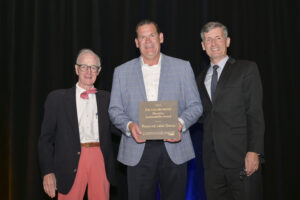
The Trailhead Award is for companies at the very beginning of their sustainability efforts. They may just be laying out their strategy, setting goals, and taking those first—often most difficult—steps.


This year’s Trailhead Converter winner, NCCO, has made a clear commitment to change the company culture around sustainability. From reducing waste and engaging employees to even installing signage around their plant to raise awareness, they’re setting the tone for what’s ahead.


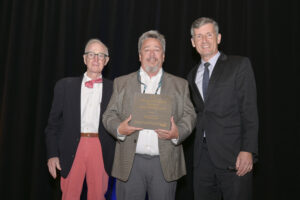
Pictured (Left to Right): Calvin Frost, Darryl Parham, and Philip Coates


State Paid Leave and Time Off Laws with Upcoming Changes

By Paige McAllister, The Workplace Advisors, Vice President of Compliance


Paid time off is a common benefit offered by many companies to their employees as part of their total compensation package. While federal law does not require any such paid time off, many states have regulations that require employers to offer employees paid time off and/or paid leaves of absence in some form.


We know it can be challenging to track what is required, so we have compiled state sick and family/medical leave below. We are also including highlights of recent or upcoming changes within those categories to help you make necessary adjustments.


Sick time: While federal law does not mandate sick time, some states do require employers to provide certain employees paid sick time to use for covered reasons, such as for their own or a family member’s diagnosis or treatment of a health condition or preventative care. Those states include Arizona, California, Colorado, Connecticut, Delaware, Maryland, Massachusetts, Michigan, Minnesota, New Jersey, New Mexico, New York, Oregon, Rhode Island, Vermont, Washington, and Washington. D.C. In addition, Illinois, Maine, and Nevada offer similar time-off policies that employees can use for any purpose.


Recent or Upcoming Changes


Alaska: New Paid Sick Time (Effective July 1, 2025) All employers must provide all employees (including full-time, part-time, temporary, and seasonal) with paid sick time, accrued at a rate of one hour for every 30 hours worked. Sick time can be capped based on the company’s total number of employees. The cap for employers with 14 or fewer employees is 40 hours, and for those with 15 or more employees, the cap is 56 hours. Any unused sick time must carry over into the next benefit year with no cap or loss of benefit.  Employees can use this sick time for covered reasons and cannot be required to provide documentation for absences shorter than three days.


Maine: Increases to Paid Time Amounts (Effective September 24, 2025) Currently, employees can accrue up to 40 hours of paid time off in a benefit year and can carry over up to 40 hours of unused paid time off into the following benefit year; however, employers can cap an employee’s total balance to only 40 hours. Under the new changes, employees will be able to accrue up to 40 hours on top of carrying over up to 40 hours, which means they could have a balance of up to 80 hours after two years of accrual with no use.


Missouri: Sick Leave Law Rescinded (Effective August 28, 2025) The new law, which went into effect May 1, 2025, was rescinded as of August 28, 2025. Any sick time accrued during this period must be provided, but no additional time must be accrued or provided.


Nebraska: New Sick Leave Law (Effective October 1, 2025) Under the Nebraska Healthy Families and Workplace Act (HFWA) employers with 11 to 19 employees must provide up to 40 hours of sick time to all employees who work at least 80 hours for their company, and employers with 20 or more employees must provide up to 56 hours of paid sick time each year. (Employers with 10 or fewer employees are currently exempt from providing sick time.) Accrual starts after the employee completes 80 hours of employment. Employees must be allowed to carry over all unused sick time into the next benefit year.


Oregon: Sick Leave Expanded to Blood Donation (Effective January 1, 2026). Employees can use paid leave for time off to donate blood.


Washington: Sick Leave Reasons for Use Expanded

(Effective July 27, 2025) Employees can use mandated sick leave to prepare for or participate in any judicial or administrative immigration proceeding for the employee or their family member.

(Effective January 1, 2026) Employees can use available paid sick time for time taken due to them or a family member being a victim of a hate crime.


Medical or family leave: Under the Family and Medical Leave Act (FMLA), federal law requires all employers with 50 or more employees to offer job- and benefit-protected leave to eligible employees for covered reasons. This time is not paid.


In addition to FMLA, several states mandate additional paid and/or unpaid leave for employees taking covered reasons. These states include Alabama, Alaska, California, Colorado, Connecticut, Hawaii, Kentucky, Massachusetts, Minnesota, New Jersey, New York, Oregon, Rhode Island, Vermont, Washington, and Washington, D.C.


Recent or Upcoming Changes to Established Paid Leave Laws


Colorado: FAMLI Revisions (Effective January 1, 2026) Employees will be allowed to take an additional 12 weeks in addition to the 12 weeks of bonding time (so 24 weeks total of FAMLI) if their newborn child is in the neonatal intensive care unit (NICU).


Washington: Updates to PFML (Effective January 1, 2026) Several changes, including:

  • Job restoration protections for all employees in PFML who have worked 180 days are being phased in as follows:
    • Current: Employers with 50 or more employees;
    • January 1, 2026: Employers with 25 or more employees;
    • January 1, 2027: Employers with 15 or more employees; and
    • January 1, 2028: Employers with 8 or more employees.
  • Employers can count time taken under FMLA toward the PFML job restoration protections if they notify the employee of this intention within five days of receiving a request, even if the employee is not receiving PFML benefits.
  • Health benefits must be continued for the entirety of PFML regardless of any FMLA protection.
  • Employees can take PFML in increments of at least four consecutive hours.

New or Upcoming Paid Leave Laws


Delaware: New Paid Family Medical Leave (PFML) Payroll deductions started January 1, 2025; claim submissions begin May 1, 2026.

Employees who work at least 60% of their time in Delaware and have worked for their employer for 12 months or longer and have at least 1250 hours of employment in the past 12 months are eligible for up to 12 weeks a year of paid leave. Employees can use a combination of up to 12 weeks in a lump-sum or intermittently to care for a new child (the full 12 weeks) and up to six weeks for their own serious medical condition or injury, to care for a family member with a serious health condition, or to take time when a family member is overseas on a military deployment. Employees must file through the state’s LaborFirst Claimant Portal for paid benefits, but must also provide their employer with advanced notice when possible.


Maine: New Paid Family and Medical Leave Payroll deductions started January 1, 2025; claim submissions begin January 1, 2026.

Employees who work in or whose operations are based in Maine are eligible to up to 12 weeks a year of paid leave for family leave, medical leave, safe leave, or military family leave. Leave can be taken in a lump sum or intermittently with job protection if they were employed for more than 120 days prior to going on leave. Employees must file through the state’s Paid Family and Medical Leave Benefits Authority and provide their employer with advanced notice when possible.


Delayed Paid Leave Law


Maryland: Family and Medical Leave Insurance (FAMLI) program Payroll deductions delayed until January 1, 2027; benefits delayed until January 3, 2028.


When implemented, FAMLI will provide eligible employees with job protection and pay replacement of up to $1,000 per week for up to 12 weeks for covered leave.


The Workplace Advisors can help you stay informed of the leave laws that apply to your employees in all 50 states, as well as other protected paid and unpaid time off, such as jury duty, school activities, victim of crime, and/or lactation breaks.


Smarter Inspection for Smarter Converters

How BW Converting’s Guardian PQV System from their Baldwin brand is delivering automation, accuracy, and waste reduction for today’s label and printed packaging converters.

In the current business climate, label and narrow web printed packaging converters are under more pressure than ever. Margins are tight, sourcing expectations are high, and the pace of production is only accelerating. Converters across the narrow to mid-web space report that the most pressing challenge is the persistent shortage of skilled labor, particularly when it comes to hiring and retaining experienced flexo and digital press operators. As converters work to meet evolving demands from CPGs and industrial printed packaging sourcing teams, including faster turnarounds, more customization, and zero-defect expectations, they’re finding that traditional production models are no longer enough


Converters across the narrow to mid-web space report that the most pressing challenge is the persistent shortage of skilled labor.


That’s where automation and inspection technology come in, not just as a quality control tool, but as a critical component of the modern pressroom. BW Converting’s Baldwin brand Guardian PQV 100% Print Inspection System is helping converters address today’s workforce realities and market pressures head-on. With a powerful blend of automated setup, real-time defect detection, and connected workflow capabilities, the PQV system supports leaner staffing models while raising the bar on quality and accountability.

Built for Digital, Compatible with all Press Technologies

With more label converters investing in digital and hybrid presses, the PQV system has evolved to meet the need for high-mix, low-volume, nonstop production. Its new front-end automation capabilities allow the system to seamlessly support automatic job changeovers, a critical feature for digital lines running a series of short runs without stopping the press. The system’s prepress integration accepts standard PDF files generated by any prepress workflow to auto-build job projects ahead of time. These pre-trained inspection projects are automatically recognized by the system as printed codes cue the next job on press, eliminating the need for operator input and minimizing downtime.

Whether your pressroom runs flexo, digital, or a hybrid press configuration, PQV’s job recognition, intuitive setup, and variable content support make it a future-ready inspection solution that scales with your operation.

The latest PQV release includes powerful inspection upgrades aimed at making precision easier to achieve for operators of all skill levels. In an industry where experienced press operators are retiring in increasing numbers, the PQV is designed to support evolving staffing models – delivering intuitive controls and automation that help teams maintain quality, regardless of tenure or experience level.


The latest Guardian PQV release includes powerful inspection upgrades aimed at making precision easier to achieve for operators of all skill levels.


One of the most notable additions is a simplified user interface with sensitivity sliders that allow press operators to instantly adjust detection thresholds, no deep menu diving required. In addition, enhanced image

post-processing now makes it easier to visualize low-contrast defects such as subtle color shifts or verify clear-on-clear varnishes. These updates help prevent costly reprints by enabling earlier and more confident defect detection.

Connected Workflows, Smarter Waste Management

Beyond real-time defect detection, Guardian PQV is now deeply integrated with Baldwin’s DataCentral workflow, transforming inspection data into actionable intelligence. With a centralized, RAID 5-secured server architecture, the system enables smarter quality decisions by letting converters view and sort defect maps by type, size, and location. Users can isolate serious issues, apply roll-level quality criteria, or trigger defect-specific removal via a converting controller. This controller interfaces directly with finishing equipment to automatically stop for, or divert, problem sections of the printed product.

For converters aiming to meet printed packaging buyer expectations for zero-defect output, or those managing yield statistically to minimize waste, this level of control translates into real savings and higher confidence in the final product.

As the demands on label and narrow to mid-web converters continue to grow, so too does the Guardian PQV platform. From wizard-driven setup and automated Delta-E color monitoring to barcode decoding, variable data support, and full FDA 21 CFR Part 11 compliance, PQV is engineered to deliver measurable value – across today’s production floor as well as the production floor of tomorrow.

Whether your company’s goal is defect-free output, increased automation, or improved workforce efficiency, the Guardian PQV 4.0 system delivers a modern, scalable inspection platform that aligns with your production priorities today – and evolves with you tomorrow. In a market where adaptability and precision are essential, PQV offers the confidence converters need to meet expectations, control costs, and stay competitive.

4evergreen Alliance: Advancing Circularity in Fiber-Based Packaging

The 4evergreen alliance is a cross-industry initiative uniting over 100 members representing every fiber-based packaging value chain stage—from forest managers to packaging producers, designers, brand owners, researchers, and recyclers. Their shared objective is to contribute to a climate-neutral society by enhancing the circularity and sustainability of fiber-based packaging. The alliance has set an ambitious goal: to achieve a 90% recycling rate for fiber-based packaging by 2030.

Fiber-Based Packaging in Context

Fiber-based packaging—including paper cups, cartons, and corrugated boxes—currently represents approximately 38% of all packaging on the European market (Material Economics, 2020). As demand for sustainable alternatives grows, the variety and complexity of fiber-based packaging formats continue to increase. While many of these are inherently recyclable, others—particularly those used in household, out-of-home, and on-the-go consumption, present specific challenges for collection, sorting, and recycling.

One example is the paper release liner, which TLMI’s Liner Recycling Initiative is actively focused on. Although liner is made from fiber, the silicone, and other coatings, hinder its compatibility with brown fiber recycling streams (e.g., cardboard and paperboard). These technical barriers highlight the need for improved design, infrastructure, and processing technologies—areas in which 4evergreen is actively investing its expertise.

Driving Innovation and Setting Industry Standards

4evergreen is committed to accelerating the development of new technologies and industry practices to support higher recycling performance. The alliance’s approach is guided by a set of four key targets to be achieved by 2025, serving as critical milestones on the path to reaching 90% recycling by 2030:

  1. Adoption of Standardized Protocols
    The fiber-based packaging industry adopts and applies 4evergreen’s Recyclability Evaluation Protocol and Circularity by Design guidelines to improve product recyclability at the design stage.
  2. Availability of Separate Collection Streams
    Infrastructure is established to ensure the separate collection of all fiber-based packaging types, focusing on formats currently underperforming in recycling systems, especially those used in convenience and food service applications.
  3. Sorting According to EN643 Standard
    All paper intended for recycling is sorted based on the EN643 standard, which classifies paper and board grades to optimize their value and recyclability within the supply chain.
  4. 100% Recycling of Collected Packaging
    Every unit of collected fiber-based packaging is processed and recycled, ensuring materials are retained in the value chain and reducing dependency on virgin resources.

Building a Truly Circular Future

The 4evergreen alliance exemplifies the collaborative effort needed to realize a sustainable and circular packaging industry. By aligning stakeholders across sectors, developing practical tools, and tackling the technical and systemic challenges of fiber-based recycling, 4evergreen is laying the foundation for an efficient, scalable circular economy.

As the industry evolves, so too must its infrastructure and practices. By addressing critical issues, such as the incompatibility of certain packaging types like paper release liners with existing recycling streams, 4evergreen ensures that innovation and environmental responsibility go hand in hand.

Through its work, the alliance demonstrates that with collective action and shared responsibility, fiber-based packaging can be a model of circularity—and a cornerstone of a more sustainable future.